First Alert: See a supermoon, meteor shower, and an eclipse here in the Midlands before spring!
COLUMBIA, S.C. (WIS) - 2026 is officially underway! For stargazers, the new year means renewed opportunities to gaze upon several celestial events. While we won’t have a front row seat to every awe-inspiring event happening this year across the globe, here’s a few the Midlands can see before the next astronomical season - spring.
The first of three full supermoons kicks off the 2026 lineup this weekend. The moon will be at its closest approach to earth in its slightly elliptical orbit around our planet, making the moon appear larger and brighter.
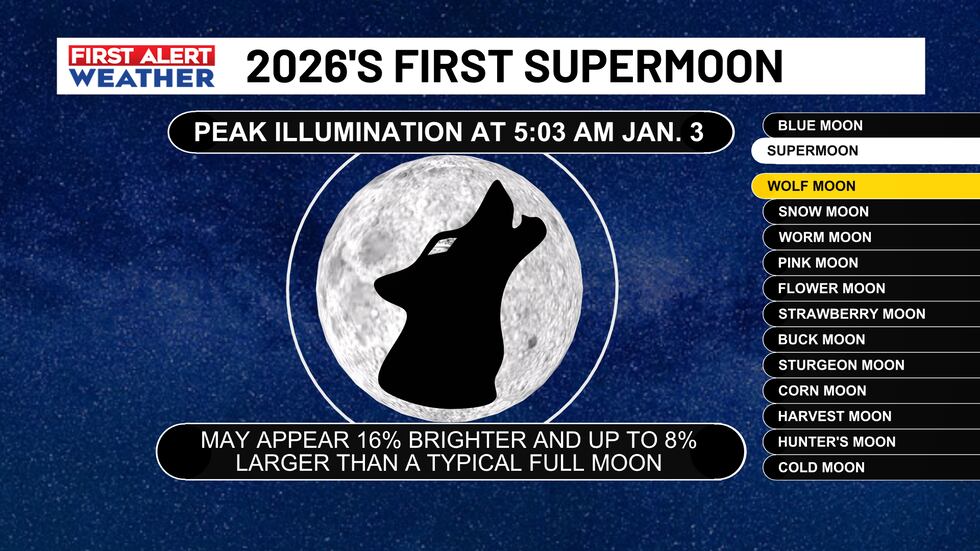
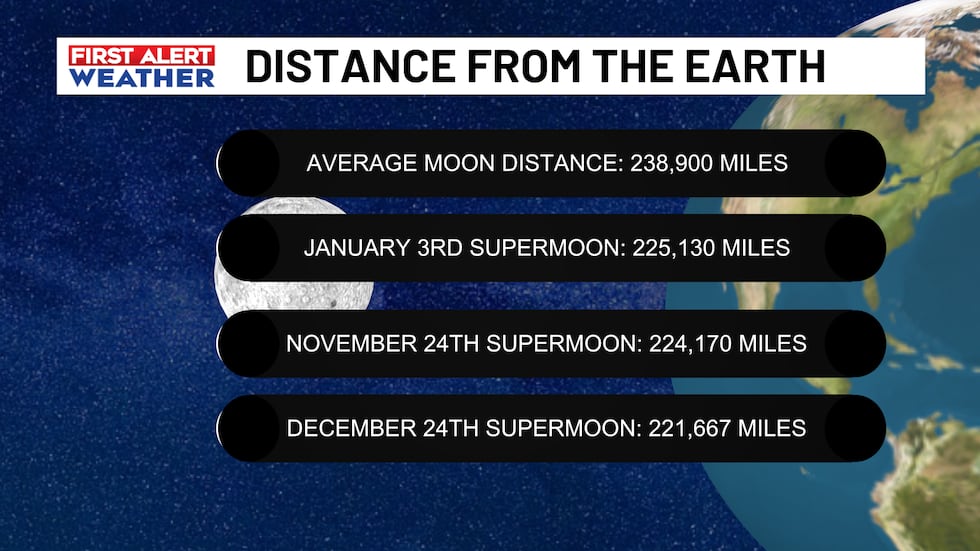
January’s supermoon is also called the wolf supermoon. It is expected to reach peak illumination at 5:03 AM ET Saturday when the moon passes the Earth at 225,130 miles. Comparing this to the average moon-to-Earth distance of 238,900 miles shows a difference of nearly 14 thousand miles.
If rain and/or clouds obscure your view of the wolf supermoon Saturday morning, don’t worry; the moon will still appear noticeably larger and brighter than usual for 2 to 3 more nights.
The next visible full supermoons won’t happen again until November and December.
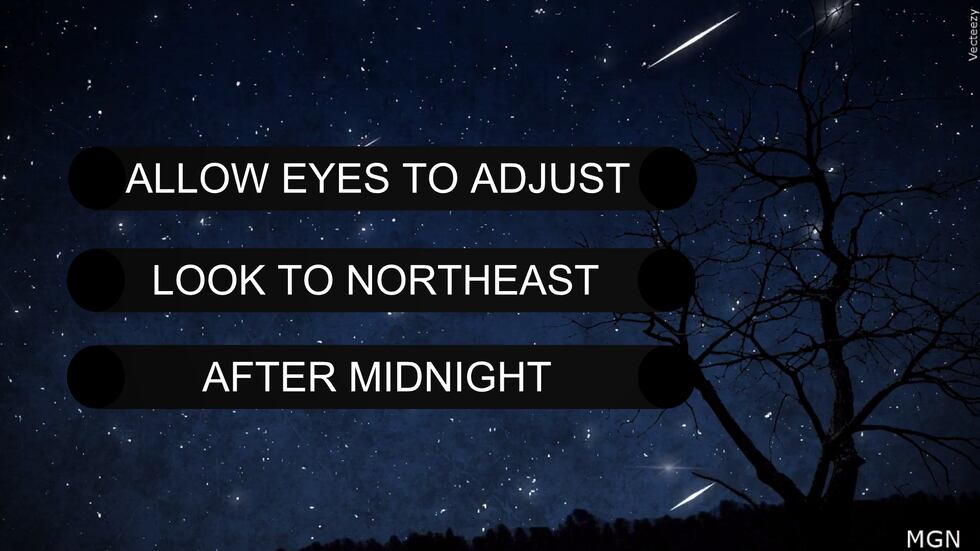
Also happening this weekend is the peak of the Quadrantid meteor shower. Unfortunately, the brightness of this weekend’s supermoon may drown out the view of the usual 10 to 20 meteors per hour possible streaking across the night sky. To increase your chances of catching a falling star, or possibly a fireball, allow at least 30 minutes for your eyes to adjust to the darkness after midnight. Then, try looking towards the northeast. While its peak is this weekend, the Quadrantid meteor shower usually remains active through the second week of January.
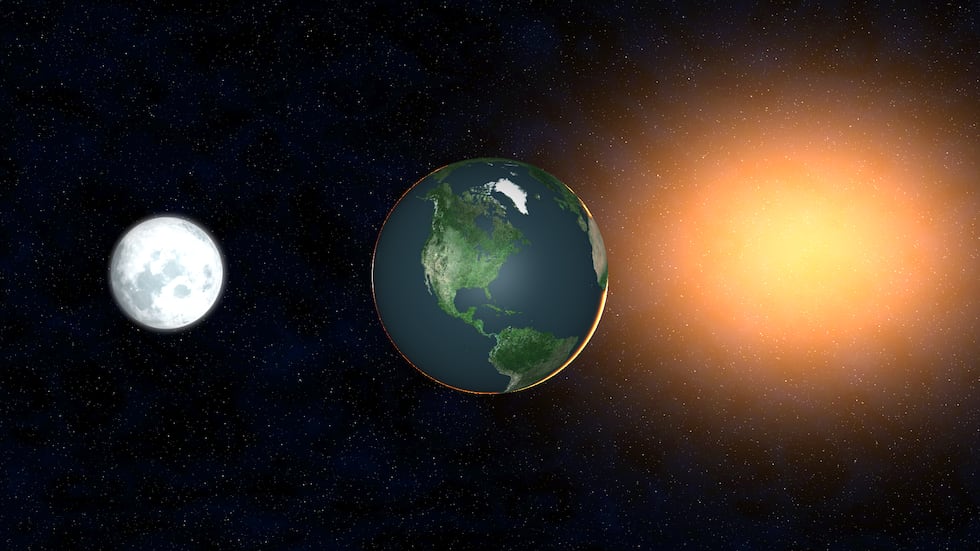
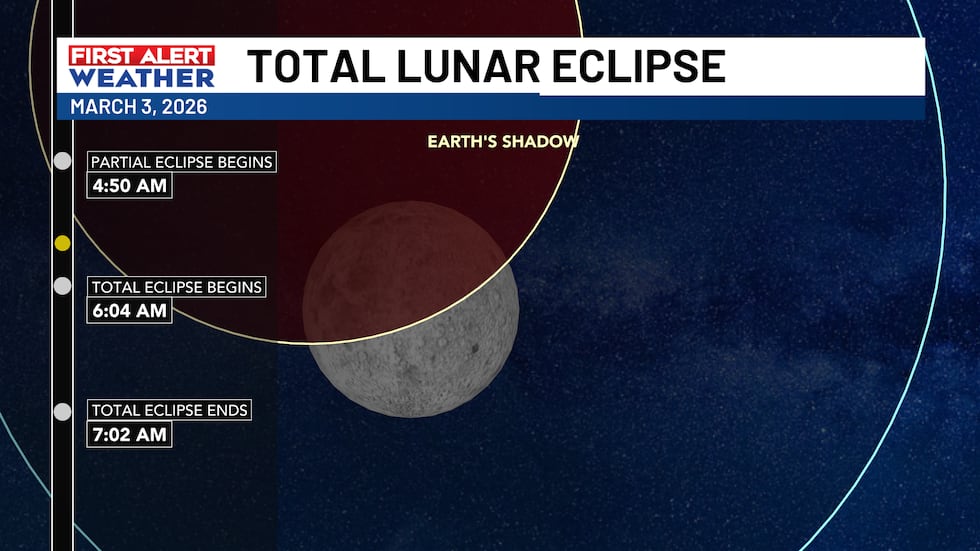
On March 3rd, the Midlands will be treated to a total lunar eclipse. This occurs when the Earth, moon, and sun line up with the Earth in the middle. This causes the Earth to cast its shadow onto the moon.
According to timeanddate.com, in Columbia, a partial eclipse will begin at 4:50 AM on March 3rd. The total eclipse begins at 6:04 AM before ending a little less than an hour later.
While the Midlands will not see the entire eclipse due to the moon setting below the horizon before it ends, we will have a view of the moon when it is completely in the Earth’s shadow. Due to the refraction of light, the moon will appear to take on a bit of a reddish hue during the total eclipse, hence the term, blood moon.
Keep checking back with us for more celestial viewing opportunities during 2026.
Feel more informed, prepared, and connected with WIS. For more free content like this, subscribe to our email newsletter, and download our apps. Have feedback that can help us improve? Click here.
Copyright 2026 WIS. All rights reserved.