Murdaugh defense seeks dismissal of murder indictments, challenges T-shirt evidence and grand jury investigation
COLUMBIA, S.C. (WIS) - Alex Murdaugh’s attorneys are asking a judge to dismiss the murder indictments against him, alleging investigators mishandled evidence, misled a grand jury and improperly used the State Grand Jury to build the case against him.
The defense’s latest filing focuses in part on a white T-shirt Murdaugh wore the night his wife, Maggie, and son Paul were killed in 2021. His attorneys say testing of samples from the shirt did not detect human blood, but disputed blood-spatter evidence was presented to the grand jury that indicted him.
Murdaugh’s attorneys also allege investigators pressured an outside expert to change his initial opinion about stains on the shirt and that chemical testing altered the garment. They argue the alleged misconduct warrants dismissal of the indictments.
The claims are the defense’s allegations, not findings by the court. Judge Debra McCaslin has not ruled on the dismissal request.
SLED said it was not available for an interview and deferred to the South Carolina Attorney General’s Office. WIS has reached out to the Attorney General’s Office and is awaiting their response.
WIS previously reported that the defense submitted a 235-page collection of exhibits on Oct. 30 in support of its request. The attorneys first moved to dismiss the indictments in August.
The dispute over the white T-shirt
Murdaugh’s lawyers say laboratory tests on samples from the shirt did not confirm the presence of human blood. They also allege that subsequent chemical processing altered or ruined the fabric, raising questions about whether the shirt could be evaluated again.
The defense has previously accused SLED of withholding the negative testing results from prosecutors and outside experts. Those allegations appeared in a separate July filing seeking independent DNA testing in the case.
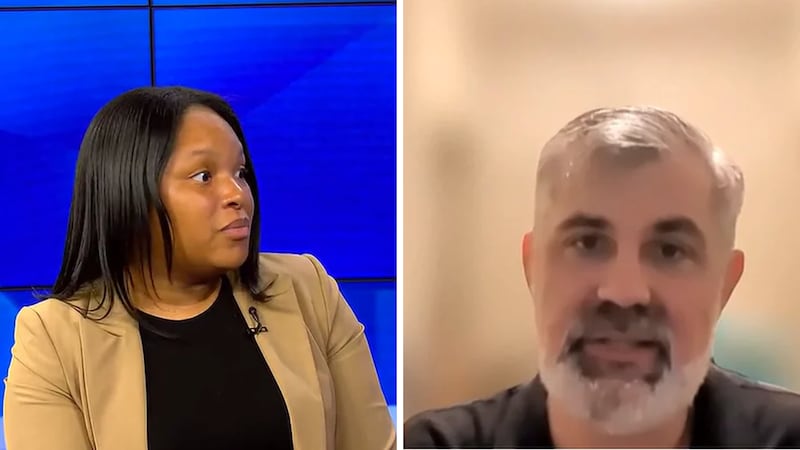
The distinction between a preliminary test and a test specific to human blood is important, said Dr. Way Fountain, a University of South Carolina instructor who teaches forensic science and forensic analytical chemistry.
Fountain told WIS that investigators can use a preliminary, or presumptive, test to help decide whether a sample needs further analysis. A separate test may then be used to determine whether a sample contains human blood.
“A lot of things can be red and appear as blood,” Fountain said.
Fountain discussed forensic procedures generally; he told WIS he did not know exactly what tests had been performed in this particular case. A negative result on tested samples should not be described as proof that every part of a garment was free of blood.
What the defense says happened with the expert
The exhibits include an initial report by Tom Bevel, an outside bloodstain-pattern expert. In that report, Bevel wrote that the stains he evaluated were “consistent with transfers and not back spatter from a bullet wound.”
The defense alleges SLED investigators subsequently pressured Bevel to change his initial opinion and that a later assessment supported a blood-spatter theory. The exhibits include reports and emails exchanged between Bevel and investigators. The defense’s interpretation of those communications remains an allegation, not a court finding.
The defense also contends inaccurate information about the shirt was presented to the Colleton County grand jury.
A transcript excerpt included in the exhibits shows SLED agent David Owen testified at the original trial that he had not seen the confirmatory testing report until November 2022, after Murdaugh was indicted. Under questioning from defense attorney Jim Griffin, Owen acknowledged that what he had told the grand jury about the shirt was not correct.
“In reference to the shirt, correct,” Owen testified when asked whether what he told the grand jury was not correct. The testimony does not, by itself, establish the defense’s separate allegation that evidence was intentionally fabricated.
What bloodstain-pattern analysis can — and cannot — tell investigators
Bloodstain-pattern analysts examine how stains appear and where they are located to help evaluate what might have happened at a scene, Fountain said. He described questions analysts may consider, such as where a person was positioned and how far away someone might have been.
“There are limitations to that,” Fountain said, adding that the goal is to help assess questions such as “how far away a suspect was.”
His comments were a general explanation of the analysis, not a conclusion that the stains on Murdaugh’s shirt were blood or evidence of a shooting. Fountain did not identify a specific limitation of bloodstain-pattern analysis in the portion of the interview provided to WIS.
Fountain also said the order in which evidence is tested matters. Preliminary tests can help determine which samples should receive further examination, he said, and analysts must consider the possibility that one test could affect a later one.
Grand jury and leak allegations
The defense’s motion goes beyond the shirt. Murdaugh’s attorneys allege the State improperly used the State Grand Jury’s authority during an investigation known as “Operation Low Country Boil” to gather evidence for the county murder case.
The defense says case-management records and subpoena logs support its argument that the State Grand Jury exceeded its jurisdiction. The exhibits include a subpoena log and other investigation records. Whether the investigation was authorized, and whether any alleged misuse would justify dismissal, are questions for the court.
The defense also alleges information from the investigation was leaked to the news media before Murdaugh was indicted and argues publicity about disputed evidence prejudiced the public. The filing does not itself establish who leaked information or that grand jurors were influenced by it.
A separate dispute over DNA testing
The debate over preserving and testing evidence has surfaced in other pretrial filings as well.
In July, Murdaugh’s attorneys asked that reserve DNA samples associated with Maggie Murdaugh’s fingernails be sent to Othram Inc., a private forensic genetic genealogy laboratory. The defense said it hoped additional testing could help identify an unknown male DNA contributor.
The defense objected to further state testing first, arguing it could consume limited material needed for the outside analysis. That request is separate from the motion to dismiss the indictments. WIS has not confirmed the current status or results of that testing in the materials available for this story.
The presence of DNA from an unknown contributor, by itself, does not establish when or how it was deposited or identify the person responsible for the killings.
What happens next
McCaslin will consider the defense’s request and any response from prosecutors. The allegations do not automatically dismiss the charges, and the judge has not yet ruled on the motion.
The South Carolina Supreme Court overturned Murdaugh’s murder convictions and ordered a new trial after questions about jury tampering in the first trial. His retrial is scheduled for April 5, 2027.
Feel more informed, prepared, and connected with WIS. For more free content like this, subscribe to our email newsletter, and download our apps. Have feedback that can help us improve? Click here.
Copyright 2026 WIS. All rights reserved.